Direct Bookings: Why Paying a Hotel SEO Agency Monthly No Longer Works in the AI Era
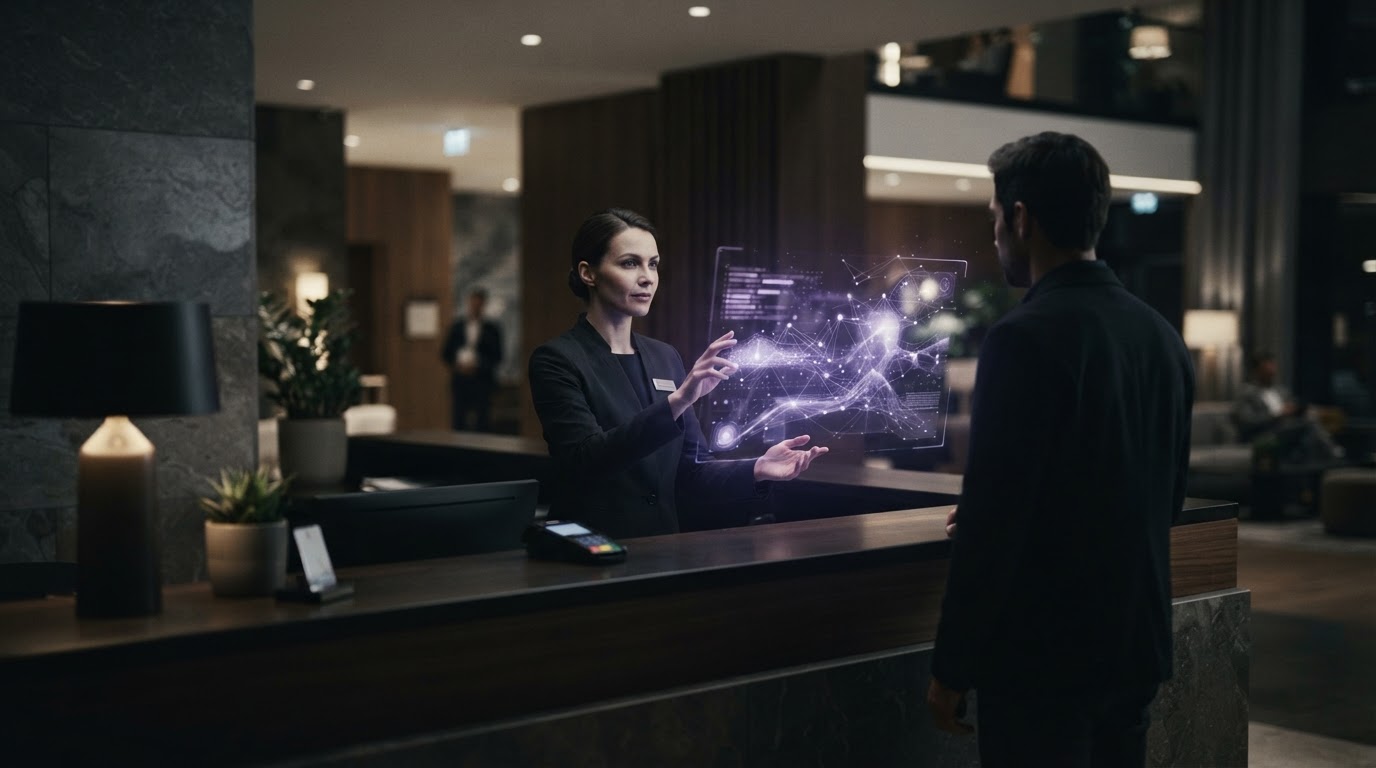
Travellers increasingly turn to generative AI—ChatGPT, Gemini, Perplexity—to plan their stays. They ask: "Find me a charming hotel near the city centre with a good breakfast." The engine reads structured data, synthesizes reviews, and delivers a shortlist. Your hotel either appears in that answer or it does not. Monthly SEO retainers that optimize for traditional search rankings no longer guarantee visibility when the search engine itself writes the recommendation. The rules have shifted from ranking positions to citation authority.
The Myth: Stacking Monthly Subscriptions to Escape Commission Platforms
For a decade, the choice felt binary. Pay Booking.com or Expedia twenty percent of every reservation, or pay a specialized hotel SEO agency five hundred to two thousand euros per month to rank organically and capture direct bookings. The latter promised independence: own your traffic, control your margin, build a loyal guest base unmediated by third-party platforms.
The promise was never a lie. It was incomplete.
Monthly SEO retainers delivered incremental gains—better on-page optimization, backlink campaigns, content calendars—but operated within a paradigm where Google displayed ten blue links and the hotel that ranked third captured more clicks than the hotel ranked seventh. Agencies sold positions. Positions delivered traffic. Traffic converted into bookings. The logic was linear. The invoices were recurring.
Yet the marginal cost of that logic has grown unsustainable for independent hoteliers. A small boutique hotel pays the same monthly SEO fee as a chain property but lacks the content production capacity, the multilingual support team, and the brand recognition to compete at scale. The retainer becomes a lease on visibility, not ownership of it. Stop paying, and the work stops. The content pipeline dries up. The rankings erode. You are renting attention, month after month, with no residual asset when the contract ends.
The OTA commission model is transparent: you pay when you sell. The agency retainer model is opaque: you pay to compete, with no guarantee of conversion. Both extract value indefinitely. Both assume the hotel lacks the means to generate its own marketing intelligence. That assumption no longer holds.
The Paradigm Shift: Generative Engines Cite Proof, Not Ad Spend
Generative search engines do not rank ten blue links. They synthesize an answer. When a traveller asks an AI to recommend a hotel, the engine evaluates structured local data: your Google Business Profile completeness, the semantic content of your guest reviews, the consistency of your name-address-phone across directories, the recency of your photos, the specificity of your service descriptions. It cross-references competitor properties within the same geographic radius. It weights authenticity over advertising budget.
This is the shift from SEO to GEO: from optimizing for ranking algorithms to optimizing for citation by inference engines. The hotel that appears in the AI's recommendation is not the one that paid the most for backlinks last quarter. It is the one whose public data signals align most clearly with the query intent.
Consider the query: "boutique hotel near the old town with excellent breakfast." The generative engine parses your Google reviews for mentions of breakfast quality. It checks whether your profile lists "breakfast" as a service. It evaluates competitor reviews to determine relative strength. It does not care whether you run Google Ads. It does not reward the hotel whose agency published fifteen blog posts about breakfast this year. It cites the hotel whose actual guests praised the breakfast in their own words, and whose structured data confirms that breakfast is offered.
Authenticity becomes the currency. Guest reviews are not testimonials to display on a landing page—they are the raw training data that large language models use to assess your reputation. A single detailed five-star review describing the warm croissants and the river view terrace carries more GEO weight than a paid advertorial. The AI reads all of it. It synthesizes all of it. It recommends based on convergence of signals, not on who hired the best content strategist.
Traditional hotel SEO agencies still operate in the old paradigm: produce more content, build more links, optimize more pages. That work is not obsolete, but it is no longer sufficient. The fundamentals haven't changed, but the weight has shifted. Structured local presence now matters more than keyword density. Review semantics matter more than meta descriptions. The agency charging you monthly to write blog posts about local attractions is solving yesterday's problem with yesterday's tools.
The Cost of Dependency: Why Intelligence Should Not Be a Subscription
Most independent hoteliers do not need a content factory. They need clarity. What do guests actually value about this property? What do competitors offer that we do not? Which seasonal moments drive local demand? What should we communicate, to whom, and when?
These are not questions that require twelve-month contracts. They are diagnostic questions. The answers exist in public data: your own reviews, your competitors' reviews, your Google Business Profile analytics, local search trends, nearby events. The problem is not access to data. The problem is synthesis. A human analyst could spend twenty hours reading through competitor reviews, categorizing themes, identifying gaps. Or an AI agent could do it in five minutes and deliver the analysis already written.
The traditional agency model treats intelligence as a service: you rent the strategist's brain month after month. Our approach treats intelligence as a deliverable: you receive a complete strategic snapshot once, you act on it, and you own the output permanently. No monthly retainer. No dependency. No recurring invoice for work that could have been completed in a single pass.
We built Zenplan with a principle borrowed from software design: zero setup. You provide one input—your hotel's Google Maps URL—and the system autonomously retrieves your Business Profile, scrapes and analyzes your reviews, identifies your four closest competitors, cross-references local seasonal trends, and generates a thirty-day action plan with every promotional offer, social media post, and guest email already written. You can read the full diagnostic for free. You pay €39 once to unlock and export the complete plan, or €19 per property if you manage multiple locations and purchase a credit pack. There is no subscription. There is no renewal. The intelligence does not expire.
This is not a replacement for an agency relationship if you need continuous execution support—design, photography, reservation system integration, multilingual customer service. It is a replacement for the diagnostic and strategic layer that agencies bundle into recurring fees but that independent properties only need intermittently. You do not need a new content calendar every month. You need one good calendar, grounded in real data about real guests and real competitors, that you can execute across the quarter.
What Generative Visibility Actually Requires
If generative engines cite proof rather than PageRank, what proof do they look for?
Structured service data. Your Google Business Profile must explicitly list the services you offer: breakfast included, pet-friendly, airport shuttle, bike rental, spa access. These are not marketing copy—they are machine-readable attributes. When an AI is asked to find hotels with a specific amenity, it filters by structured fields first, not by scanning your homepage prose.
Semantic review density. A hundred generic five-star reviews that say "great stay" carry less weight than thirty reviews that mention specific experiential details: the courtyard fountain, the concierge's restaurant recommendations, the evening wine service, the soundproofing. Generative engines parse for specificity. They summarize themes. If twenty guests mention the rooftop terrace independently, the AI infers that the rooftop terrace is a defining feature and will cite it when relevant.
Competitor differentiation signals. When comparing you to nearby properties, the AI looks for what you do differently. If every hotel in the old quarter offers breakfast and free Wi-Fi, those are table stakes, not differentiators. If you are the only one with a verified partnership with a local vineyard tour operator, that becomes a citing opportunity. Your competitive intelligence must be explicit and public, not buried in internal strategy decks.
Consistency across platforms. If your Google listing says you open at 7 a.m. but your Facebook page says 8 a.m., generative engines notice the contradiction and deprioritize you as a source of uncertain information. Consistency is not a detail—it is a trust signal. Hotels that contradict themselves across directories signal operational instability, even if the discrepancy is accidental.
Recency of content. A property whose most recent Google post was published eighteen months ago signals inactivity. A property that posted a seasonal offer last week signals vitality. Generative engines associate recency with relevance. You do not need daily updates, but you need a credible rhythm: monthly posts, quarterly offer refreshes, responses to reviews within a week. The rhythm counts. Silence is interpreted as closure risk.
None of these requirements demand a monthly agency relationship. They demand a one-time audit, a structured action plan, and disciplined execution. The diagnostic is the hard part. The execution is copy-paste.
The Zenplan Approach: One Scan, Permanent Insight
We designed Zenplan to collapse the diagnostic timeline from weeks to minutes and the cost from thousands to tens of euros. You input your property's Google Maps URL. Our system retrieves your complete Google Business Profile, downloads and semantically analyzes every review, identifies your four nearest competitors, retrieves their profiles and reviews, cross-references local event calendars and seasonal search trends, and synthesizes ten deliverable sections: visibility score, guest insight summary, competitor gap analysis, promotional offer calendar, thirty days of social posts, email nurture sequences, SEO article drafts, and a prioritized action plan.
The output is not a PDF of recommendations. It is a set of ready-to-use marketing assets. The posts are written. The offers are dated and priced. The emails have subject lines. You do not need to hire a copywriter to translate strategy into execution—the execution is already done.
You can view the diagnostic summary and competitor analysis for free, with no credit card required. If the insight proves valuable, you pay €39 once to unlock the full plan permanently. If you manage a small hotel group or a franchise network, you purchase a credit pack—four properties for €129 or ten for €190, each credit valid for twelve months—and generate a tailored plan for each location. There is no monthly invoice. There is no auto-renewal. The intelligence does not expire. You own the output.
This is not an alternative to OTA commissions—you still need distribution platforms to reach global travellers. It is an alternative to paying an SEO agency every month for strategic intelligence you only need once per quarter. The agency model made sense when producing marketing intelligence required human labor at scale. It makes less sense now that an AI agent can read ten thousand competitor reviews, extract thematic patterns, and draft thirty days of localized content in the time it takes you to drink a coffee.
Why This Matters Now
The shift to generative search is not a distant horizon. It is already underway. Forty percent of travellers under thirty-five use ChatGPT or similar tools to research destinations and accommodations before ever opening a traditional search engine. That percentage will grow. The share of queries answered directly by AI—without the user clicking through to a website—will grow with it.
If your hotel does not appear in those synthesized answers, you do not exist for that cohort. If your competitor three blocks away has better-structured data, more semantically rich reviews, and a recent offer calendar, the AI will cite them and not you. The playing field has not been leveled—it has been redrawn. Small independent properties with complete, consistent, authentic public data can now outrank chain hotels with incomplete profiles and generic reviews. The advantage has shifted from budget to rigor.
But rigor requires a starting point. You cannot optimize what you have not measured. You cannot compete with what you have not studied. The traditional response was to hire an agency to conduct that study over four to six weeks and deliver a strategy deck you would not have time to execute. The new response is to generate a complete local diagnostic in five minutes, read it over breakfast, and start publishing that afternoon.
Marketing intelligence should not be rented. It should be produced once, at marginal cost, and owned permanently. That is the model we built. That is the future independent hoteliers deserve.
FAQ
Do I still need an SEO agency if I use Zenplan?
Zenplan replaces the diagnostic and content planning layer—competitor analysis, guest insight synthesis, promotional calendars, and ready-to-publish posts. If you need ongoing design work, reputation management at scale, or technical website optimization, an agency relationship may still make sense. But you no longer need to pay monthly for strategic intelligence you can generate yourself in minutes and own permanently.
How does Zenplan analyze my hotel without me uploading any data?
We use your Google Maps URL to retrieve your complete public Google Business Profile, including reviews, photos, services, and hours. We then identify your four nearest competitors and retrieve their public profiles as well. All analysis is based exclusively on publicly accessible data—no login required, no integrations, no proprietary access. The method is zero-setup by design.
Can I use the same plan for multiple properties?
Each property requires its own scan, because the competitive context, guest reviews, and local trends differ by location. If you manage several hotels, purchase a PRO PACK: four scans for €129 or ten for €190. Each credit generates a separate, location-specific plan valid permanently once unlocked.
Is this only useful for hotels, or can other hospitality businesses benefit?
Any local establishment with a Google Business Profile and guest reviews can benefit: bed and breakfasts, vacation rentals with physical check-in locations, restaurants with rooms, wellness retreats, even high-end campsites. If your business depends on local visibility and direct reservations, the diagnostic applies.
What happens after I generate my plan—do I have to execute everything myself?
You receive ready-to-publish content: social posts, email sequences, promotional offers, article drafts. You can execute them yourself by copying into your existing tools, delegate to a part-time assistant, or share the plan with your current agency to guide their work. The plan is a deliverable, not a service contract. Execution remains your choice.
Your Scan 360°, ready to use
Zenplan analyses your Google listing, your reviews and your competitors, then delivers a complete plan.
Generate my plan