The Truth About Restaurant Marketing When You Serve 100 Covers a Day
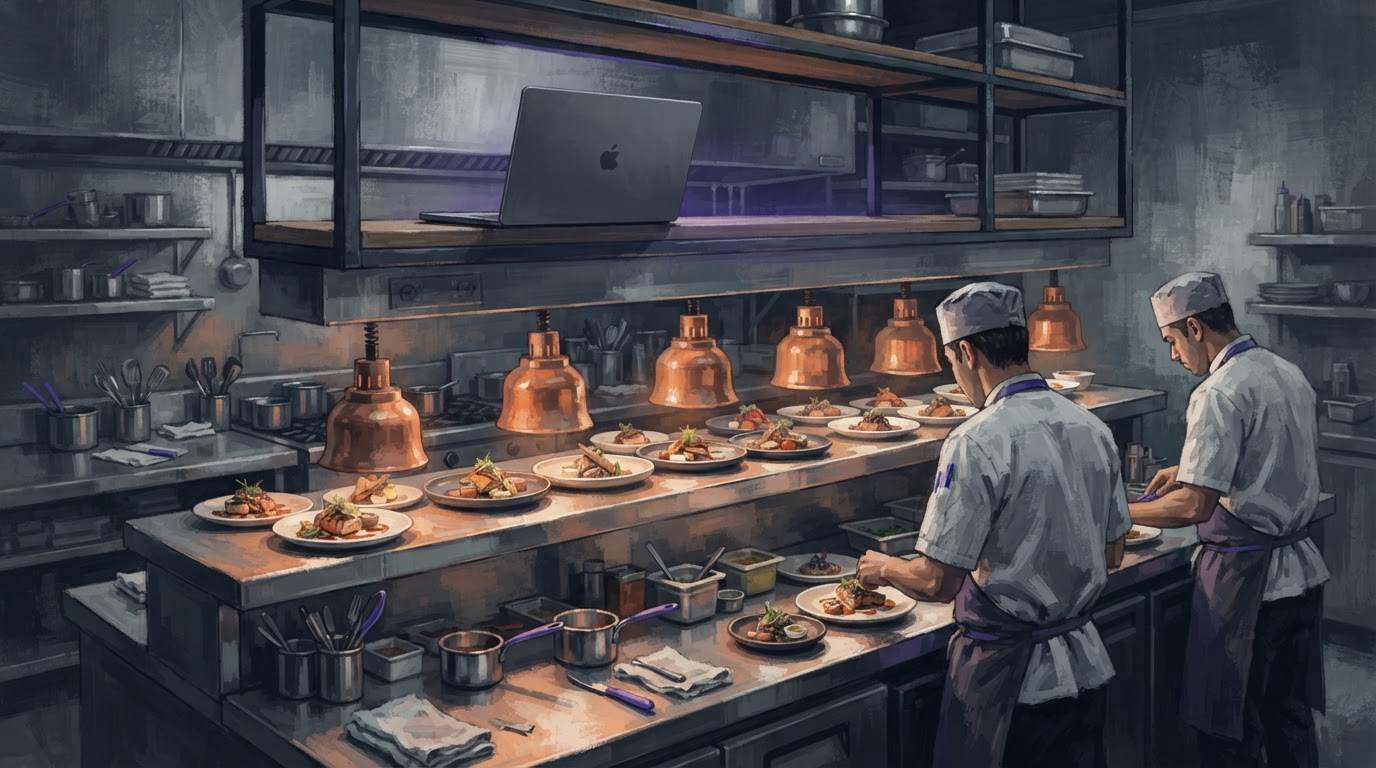
Restaurant management doesn't pause for marketing. Between prep at 6 a.m., the lunch rush at 12:30, supplier calls, staff shifts, and the evening service, there is no moment when a restaurateur can sit down, log into a dashboard, and become a content strategist. The gap between what marketing software promises and what a hundred covers per day permits isn't a skills problem or a motivation problem. It's a design problem. Tools built for people with time don't work for people who have none.
The lunch rush doesn't wait for your content calendar
Twelve-thirty on a Tuesday. The dining room is full. Three tables are waiting for their mains, one couple is asking about gluten, a supplier is texting about tomorrow's delivery, and the dishwasher has just called in sick. In that moment, no restaurateur is thinking about Instagram captions or whether their Google Business profile photo needs updating.
This is not an edge case. This is the default state of restaurant management. The idea that between the pass and the till, someone will find twenty minutes to open a laptop, log into a SaaS platform, learn a new interface, draft a post, schedule it, track its performance, and adjust the strategy for next week—that idea is a fantasy. It's not that restaurateurs don't care about visibility. It's that visibility tools assume a kind of time and attention that the job itself makes structurally impossible.
The marketing industry sells the dream of the restaurateur-as-community-manager: someone who posts daily, replies to comments in real time, A/B tests ad copy, and monitors engagement metrics. Reality sells something else. Reality sells exhaustion. The choice isn't between doing marketing well or doing it badly. The choice is between doing it at all or surviving the day.
The subscription graveyard: tools paid for, never opened
I've seen it dozens of times. A restaurateur signs up for a marketing platform at €100 per month. The first week, they log in twice. The second week, once. By the third week, they've forgotten the password. By the fourth, they've forgotten they're still paying. The subscription renews automatically. The tool sends monthly reports no one reads. Twelve months later, €1,200 has vanished into software that promised to save time but demanded more of it than the business could spare.
This isn't a condemnation of the restaurateur. It's a condemnation of the model. SaaS platforms are built for users who can afford to learn them—who have slack time, onboarding capacity, and someone on staff whose job description includes "digital marketing." For a restaurant with fifteen employees and no back office, that person doesn't exist. The owner is the marketer, the accountant, the HR manager, the buyer, and the one who unblocks the sink when the plumber can't come until Thursday.
The illusion is that technology makes things easier. The reality is that most technology makes things possible—but only if you already have the time, literacy, and infrastructure to use it. A tool that requires daily input is not a labour-saving device. It's a second job. And restaurateurs already have one.
The moment everything changed
The turning point came when I stopped asking, "How do we teach restaurateurs to use marketing tools?" and started asking, "Why are we asking them to use tools at all?"
The assumption baked into most software is that the user will do the work. They'll connect their accounts, grant permissions, configure settings, choose templates, write copy, upload images, set schedules, review analytics, iterate. The software provides leverage—but only after you've climbed the learning curve, which itself requires the one resource restaurateurs don't have: uninterrupted focus.
What if the software did the work instead?
Not in the abstract, assistive sense of "helping you create content." In the literal sense: the content already exists when you arrive. The offers are already written. The posts are already drafted. The competitive analysis is already complete. You don't learn the tool. You just read what it made.
This is the operational philosophy behind our 360° Scan. A restaurateur enters their Google Maps address—one piece of information, the only one they need to provide—and the system does everything else. It reads the Google Business profile, analyses real customer reviews, identifies the four closest competitors, detects seasonal trends, and generates a full month of ready-to-use content: social media posts, email sequences, promotional offers, blog articles, and a prioritised action plan. No onboarding. No configuration. No learning curve. Just deliverables.
Deliverables, not advice
Most marketing tools give recommendations. "You should post more often." "You should respond to reviews within 24 hours." "You should highlight your unique value proposition." All true. All useless. Because the restaurateur already knows they should do these things. What they don't have is the twenty minutes to sit down and do them.
The shift from advice to deliverables is the shift from "here's what you need to do" to "here's what you need to copy and paste." The difference matters. One preserves agency while multiplying workload. The other removes the workload entirely.
When we deliver a communication plan, we don't deliver a deck explaining why the restaurant should run a spring promotion. We deliver four ready-to-launch offers, complete with pricing, messaging, target dates, and distribution channels. When we deliver social media content, we don't deliver a guide on writing captions. We deliver thirty days of posts, one per day, with text, hashtags, and posting angle already decided. The restaurateur's job isn't to become a strategist. It's to pick what they like and use it.
This approach doesn't strip autonomy. It restores it. The restaurateur remains the decision-maker—they choose which offer to run, which post to publish, which article to share. But they're no longer the production team. The cognitive load drops from "invent everything" to "choose from what's already written."
Why I stopped charging monthly subscriptions
Subscriptions work when the user derives ongoing value from ongoing access. A restaurateur doesn't. They need the plan once, they use it, and then they need a new one—maybe next quarter, maybe next year, maybe never. Charging them every month in between isn't providing value. It's extracting rent.
So we don't. Zenplan operates on a single-payment model: €39 once for one complete plan, or €19 per plan when bought in a pack of ten. No renewal. No auto-charge. No commitment. You pay when you need it, you get the full deliverable, and you're done. If you want another plan six months later, you pay again. If you don't, you don't. The absence of a subscription isn't a pricing tactic. It's a structural alignment with how the work actually happens.
Restaurateurs don't market continuously. They market in bursts—before a new season, after a menu change, when a competitor opens nearby, when they finally have half a day to think about anything other than the service. The tool should match that rhythm, not impose a different one.
The lesson: simplicity as respect
The restaurant industry doesn't need restaurateurs to become marketers. It needs marketing tools to become invisible. The best interface is no interface. The best learning curve is no learning curve. The best software asks for one input and returns a hundred outputs.
This principle applies beyond restaurants. Any profession where the practitioner is also the operator—tradespeople, independent retailers, small hotels, wellness studios—faces the same constraint: expertise in the core business leaves no bandwidth for expertise in adjacent systems. The solution isn't training. It's design. Build tools that assume zero time, zero prior knowledge, and zero tolerance for friction.
Authenticity in marketing doesn't come from being good at marketing. It comes from being good at the thing you do and having a system that translates that competence into visibility without demanding you become someone else. A great restaurant should be found because it's great, not because its owner learned growth hacking. The technology exists to make that possible. It just has to be built with the actual constraints of the actual user's actual day in mind.
FAQ
Why don't traditional marketing tools work for restaurants?
Traditional tools assume the user has time to learn interfaces, configure settings, and produce content regularly. Restaurant management is structured around service, not screens—there's no uninterrupted block of time to become a marketer.
What does a deliverable-first approach mean in practice?
It means the content, offers, and plans are already written when you open the tool. Your job is to review and use them, not to create them from scratch. This removes the production burden entirely.
Why did you stop using monthly subscriptions?
Because restaurateurs don't need continuous access—they need a plan once, then maybe another one later. Charging monthly between uses isn't providing value; it's extracting rent. A single-payment model aligns with how the work actually happens.
Can a tool really understand my business from just a Google Maps address?
Yes. Your Google Business profile, customer reviews, competitor proximity, and local trends are all public data. Analysed together, they reveal your competitive position, customer sentiment, and seasonal opportunities—without you entering anything beyond your location.
How is this different from using ChatGPT myself?
ChatGPT requires you to know what to ask, how to structure prompts, and how to refine generic output into something specific to your location and competitors. Our system does that work automatically using real data about your establishment, so the result is already personalised when you read it.
Your Scan 360°, ready to use
Zenplan analyses your Google listing, your reviews and your competitors, then delivers a complete plan.
Generate my plan